The client had just moved in, so this was less about fixing a kitchen than setting one up. A big kitchen, too. The kind with more cabinet and drawer space than you know what to do with on day one. That sounds like the easy version of the job. It is actually the trap. When there’s room everywhere, things spread out at random, and a kitchen can look cluttered while it’s still half empty. The work was deciding where everything lives before the habits set in.
Starting with the spices
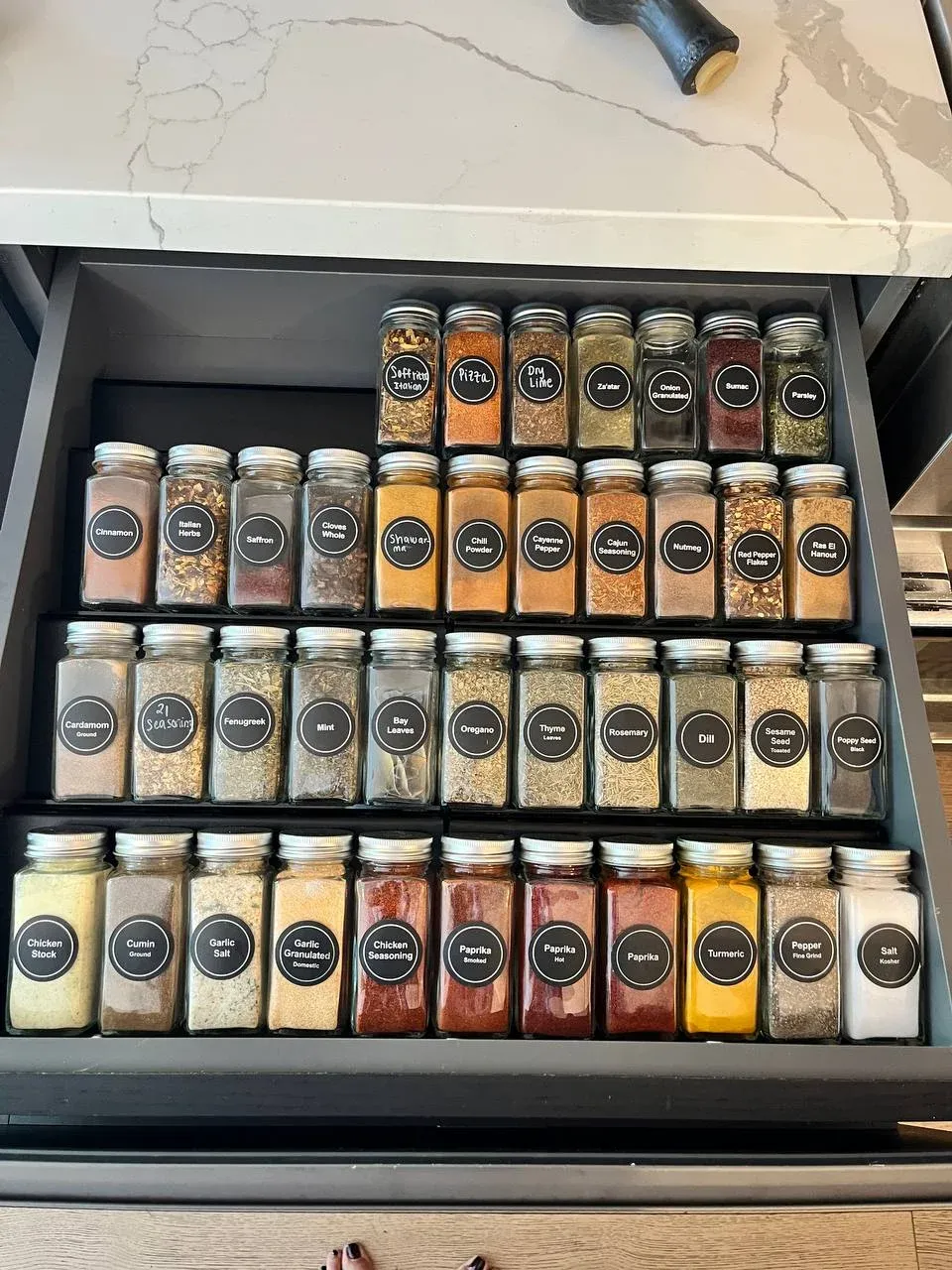
Spices are the first thing to sprawl. They come in every jar shape the store sells, and if you shelve them as they arrive you lose the one you want behind the rest by week two. We decanted the whole drawer into one jar, labeled the lids, and set them into a tiered insert so the back rows sit higher than the front. The collection reads in one look, with room left over instead of a drawer packed to the edge.
The fridge, by category
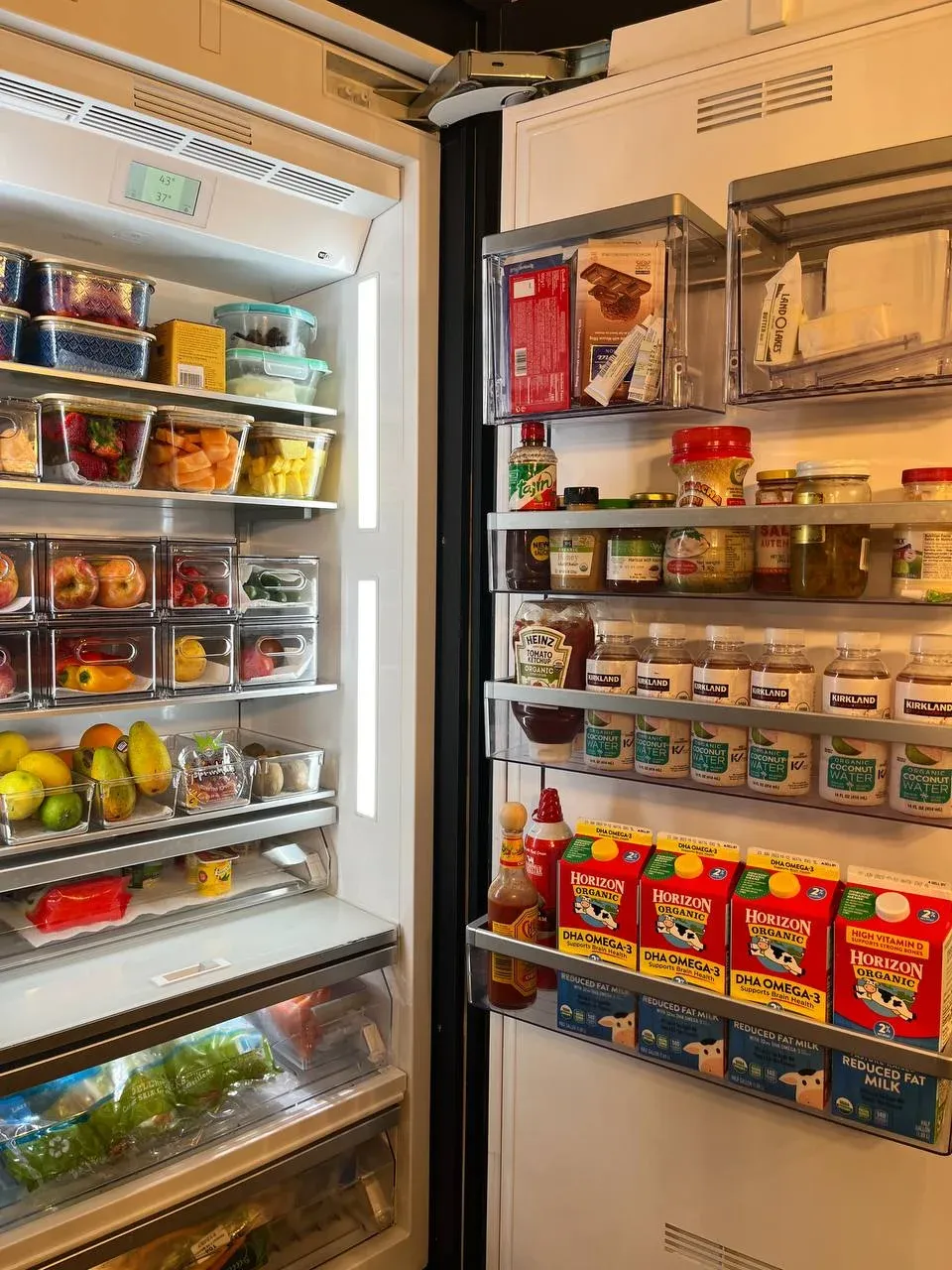
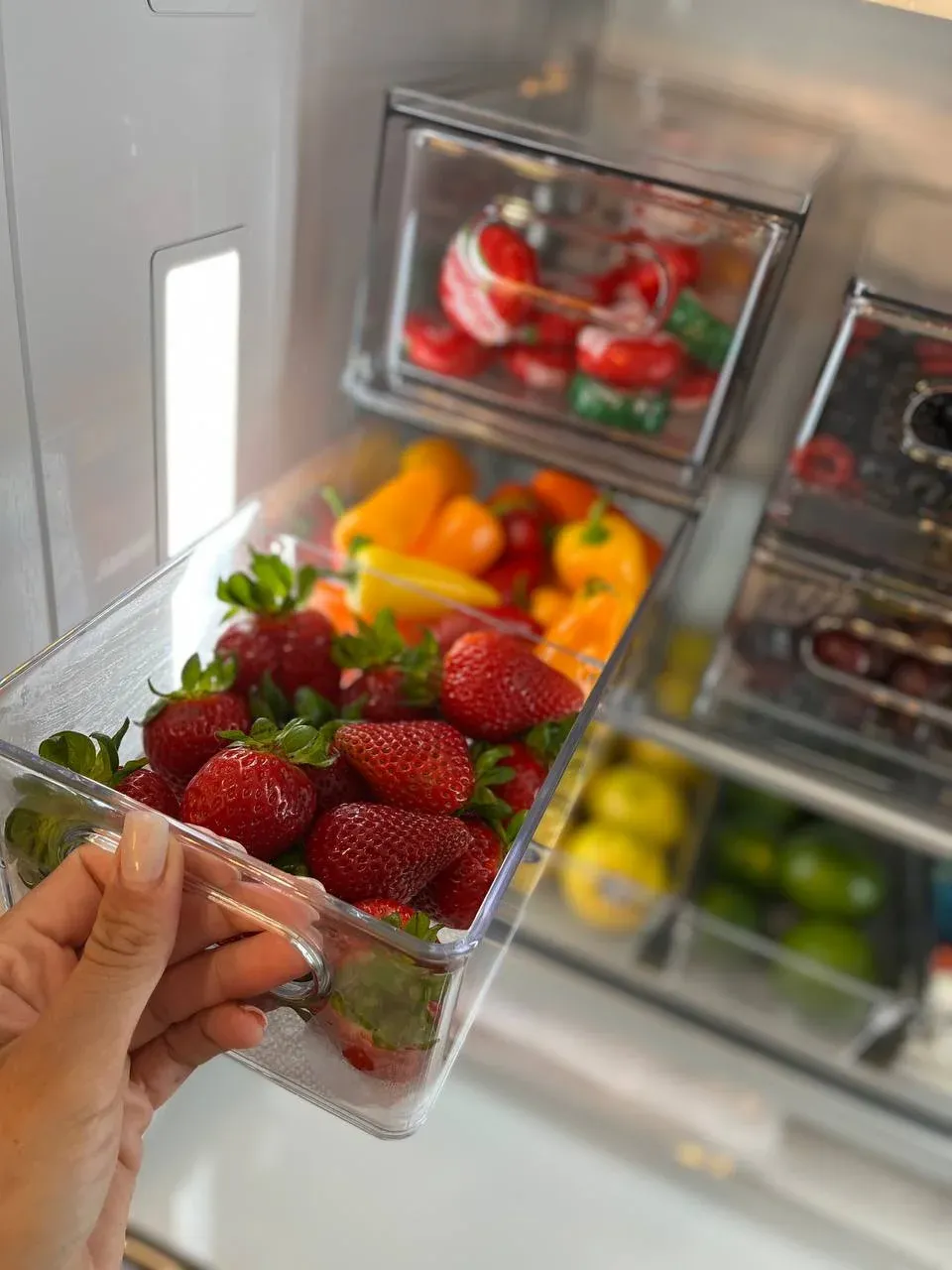
The fridge got the same logic the drawers did. Clear bins, one kind of thing per bin, and produce sorted into the pull-out drawers down to color. The point is not how it photographs, though it does photograph well. The point is that every bin slides out like a tray, so the thing at the back is as reachable as the thing at the front. Food stops getting lost, and it stops getting wasted.
Down to the last drawer
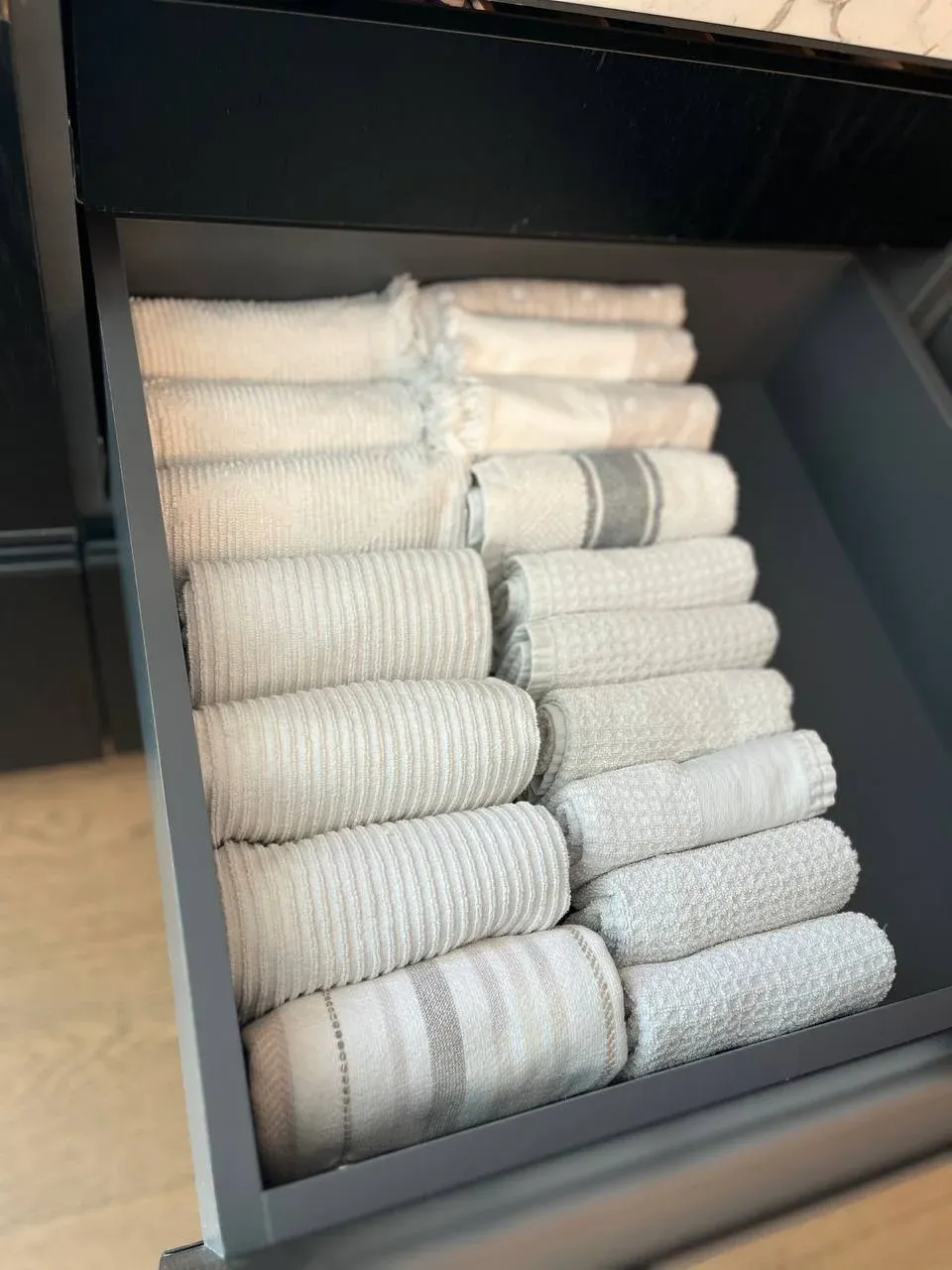
From there it was one drawer at a time. Bamboo dividers for the flatware so the everyday set, the gold, and the kids’ utensils each had a lane. Glass containers nested by size with their lids kept together. Turntables in the deep cabinets so the syrups and oils spin to the front. Towels rolled to stand on end. None of it is complicated. It just has to be decided once, so the kitchen can hold itself together after I leave.